If you own a home on the Space Coast, storm protection is not a someday project. Melbourne sits on Florida’s Atlantic coast. Hurricane season brings wind, rain, and flying debris that can turn an unprotected window into an open hole in your house. This guide covers the main types of hurricane shutters, what the building code requires, how storm protection affects your insurance, and what drives cost. You will know what to ask before you schedule an estimate.
Why Melbourne Homes Need Real Storm Protection
Your location shapes everything about how your windows and doors need to perform. The Atlantic hurricane season runs from June 1 through November 30. NOAA places the climatological peak around September 10, with most activity between mid-August and mid-October.
A hurricane rarely breaks a window with wind alone. It breaks the window with what the wind is carrying. Roof tiles, tree limbs, patio furniture, and loose gravel become flying debris at highway speeds. Once debris breaches the glass, wind pressure enters the house and begins to push up against the roof from the inside. That is how a survivable storm becomes a structural loss.
Hurricane shutters create a physical barrier between that debris and your interior. They give every opening an added layer of protection. That holds whether or not you are home when a tropical storm turns toward the coast. Many homeowners across Brevard County protect the front of the house first and leave rear patio doors uncovered, which defeats the purpose. Storm protection works as a system, and your weakest opening sets the outcome.
Explore Our Window Treatment Solutions →
The Main Types of Hurricane Shutters
Florida homeowners generally weigh five styles. Each one trades cost against convenience, appearance, and how fast you can close up before a storm arrives. The benefits line up differently depending on how you use the house. The descriptions below cover each category broadly, so you walk into any consultation already knowing the vocabulary.
Storm Panels
Storm panels are corrugated sheets of aluminum, steel, or clear polycarbonate that bolt into tracks mounted around each opening. You store them between storms and install them when a watch goes up. Panels are the most affordable route to full coverage, and they also take the most labor to deploy. Every panel has to go up by hand, which is real work across a whole house.
Accordion Shutters
Accordion shutters stay mounted permanently beside each window and door, then unfold along a track to meet in the middle. They close in minutes without tools and without storage, which matters when a system forms quickly and you are working through a long list. They sit in the middle of the market on both cost and convenience.
Bahama Shutters
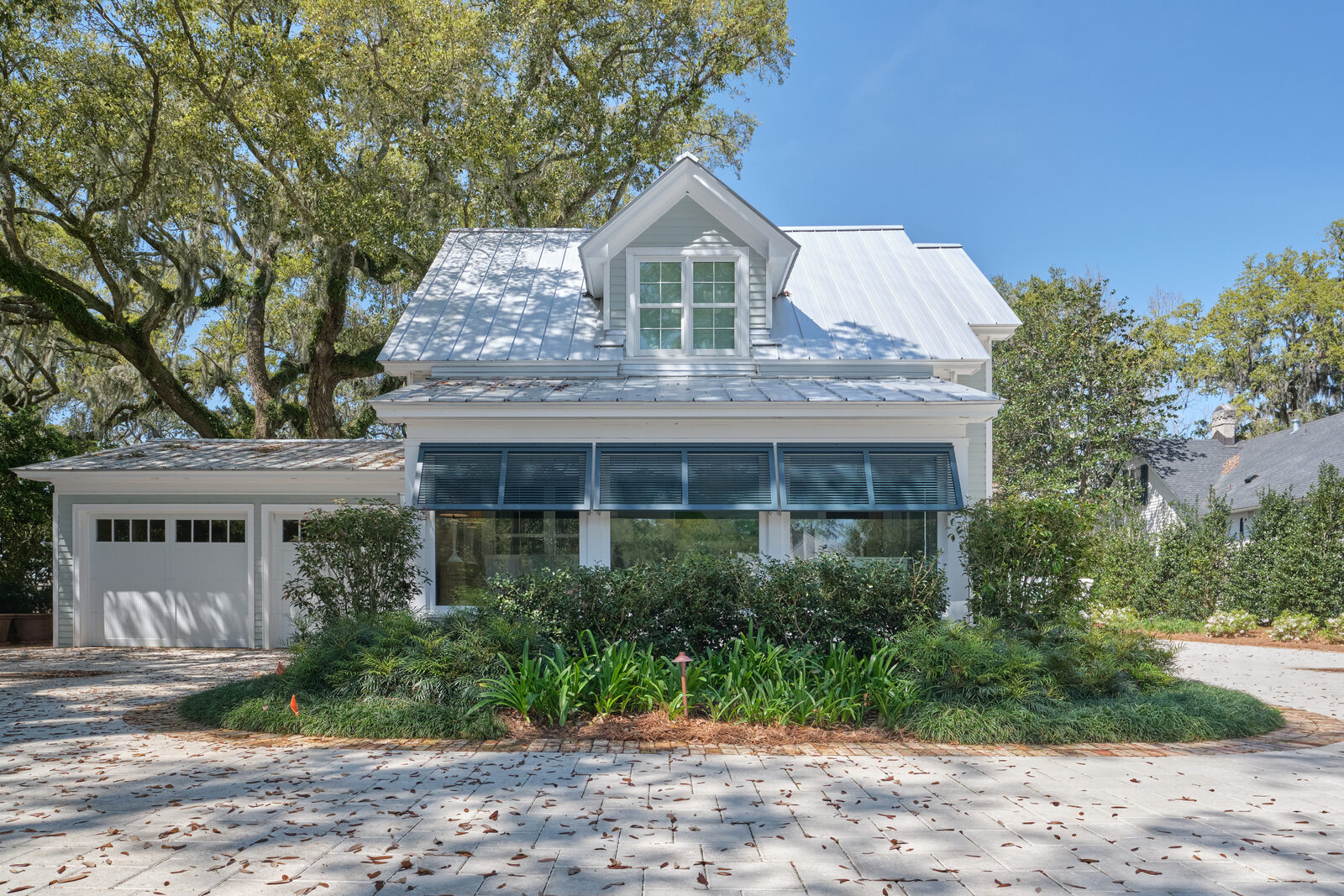
Bahama shutters hinge at the top and prop outward at an angle, shading the glass year-round and dropping flat against the wall when weather approaches. They carry a coastal look that suits beachside architecture from Melbourne Beach to Cocoa Beach. They also cut solar heat every day of the year, not only during storm season.
Colonial Shutters
Colonial shutters hinge at the sides and swing closed like traditional exterior shutters. They give a house architectural character while doing real work, which appeals if you want protection that does not announce itself as protection.
Roll-Down Shutters
Roll-down shutters sit in a compact housing above the opening and roll down on a hand crank or a motor. They deploy fastest and cost the most, and motorized versions add electrical work to the project. They also serve as a security measure for a property that sits empty part of the year.
A note on plywood. Plywood is the fallback many people reach for. Florida’s residential code does recognize wood structural panels as a limited exception, requiring a minimum thickness of 7/16 inch, specified fastener spacing, mean roof height limits, and permanently installed corrosion-resistant anchors. Cutting a sheet of CDX the afternoon before landfall does not meet that standard. Plywood also carries no Florida Product Approval, so it will not earn you the opening protection credit that an approved system does.
What The Shutter House Provides on the Space Coast
Our own scope matters here, so we will be specific. The Shutter House builds code-rated hurricane shutters in fiberglass, PVC, and aluminum, manufactured by Atlantic Shutter Systems and tested to withstand high-intensity storms. We also build Bahama shutters for Space Coast homes, alongside a full line of exterior shutters in composite, fiberglass, PVC, vinyl, and wood.
Every shutter is custom-built to your opening rather than pulled from a stock size. We fabricate in widths from 12″ to 24″ and lengths from 30″ to 84″ in ¼” increments. That precision removes the gaps and poor fit common to off-the-shelf products. On storm protection, fit is not cosmetic. A shutter that does not seat correctly against its anchors will not perform the way it was engineered to perform.
We also supply the shutter hardware that holds functional shutters in place. Choose from pintles, hinges, locks, bolts, and holdbacks in stainless steel, cast aluminum, cast iron, and wrought steel. Stainless resists corrosion best, which is worth the difference within a mile of the Atlantic.
One clarification, because the question comes up often. Our exterior screens are insect and solar screens for patios, porches, and garages. They are comfort products, not storm protection, and we recommend retracting them ahead of severe weather.
Explore Our Window Treatment Solutions →
Hurricane Shutters and the Florida Building Code
Whether your address must have opening protection depends on where a line falls, not on which county you live in. Florida’s wind-borne debris region covers two situations. The first is any area within one mile of the coastal mean high-water line where design wind speed reaches 130 mph or more. The second is any area at all where it reaches 140 mph or more. In practice that puts barrier island and direct-coastal addresses inside the requirement, while many mainland addresses sit outside it.
Inside the region, glazed openings must be impact-rated or protected by an approved covering. That covering has to pass the large missile test of ASTM E1996 and E1886, or the equivalent Florida test protocols. Impact windows and approved shutters are the two recognized paths. We build the shutters.
Two practical points follow. First, a permit is generally required. Your building department will want the product approval number for the system going in. Ask any installer to show you how the assembly will meet code at your address. Second, existing homes with original windows are typically grandfathered, which means they are legal but not protected. Grandfathering is a code status, not a safety status.
What Storm Protection Does for Your Insurance and Your Energy Bills
Wind Mitigation Credits
Florida law works in your favor here. Statute 627.0629 requires residential property insurance rate filings to include actuarially reasonable discounts or credits for features shown to reduce windstorm loss. Opening protection is named directly in the law.
The statute does not set a fixed percentage, so what you actually receive depends on your carrier, your home, and your inspection. Credits are documented on the Uniform Mitigation Verification Inspection Form, OIR-B1-1802, completed by a licensed inspector. Insurance companies are also required to publish their available hurricane mitigation discounts on their own websites, which makes comparison straightforward.
One detail costs people real money. The strongest opening protection credit generally requires you to cover every opening, including the garage door. Protecting 10 of 12 openings and leaving two bare can leave that credit on the table.
Everyday Energy Performance
Storm protection earns its keep on ordinary days too. The U.S. Department of Energy reports that heat gain and heat loss through windows account for 25% to 30% of residential heating and cooling energy use. Custom exterior window treatments shade the glass before sunlight reaches it. That lightens the cooling load your air conditioner carries through a Space Coast summer. Pair them with interior shutters and you control heat at both faces of the window.
What Hurricane Shutters Cost in Melbourne
We price every project on site rather than in print, because two houses with the same square footage rarely have the same openings. What we can do is describe the shape of the cost so you can budget with realistic numbers.
Independent industry cost guides place installed pricing in a broad band, roughly $7 to $60 per square foot depending on style. Storm panels sit at the low end and motorized roll-downs at the top. Whole-home protection for a typical Florida house commonly lands somewhere between the low thousands and the low tens of thousands. Treat those as national industry figures rather than a Shutter House quote.
Your actual number moves with:
- Number and size of openings, sliding patio doors included
- Shutter type and material selection
- Motorization, which adds electrical work
- Access and wall construction, block versus frame
- Permit fees, billed separately by your jurisdiction
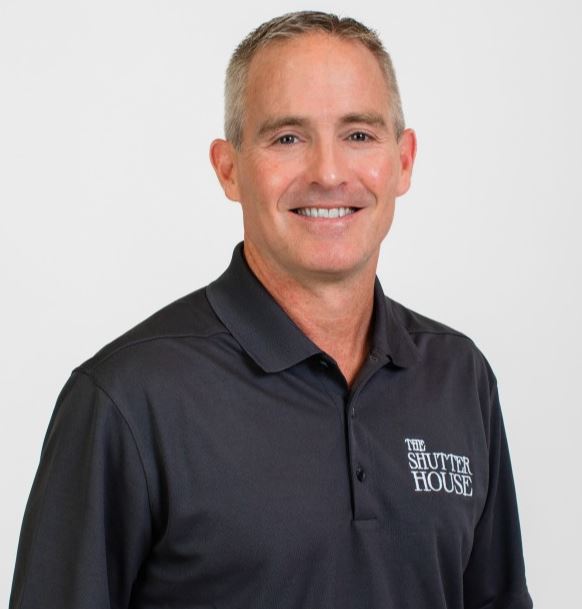
We offer free estimates throughout Brevard and Indian River Counties. Robert measures each opening, walks you through the pros and cons of each material, and gives you an honest range before you commit to anything. We will not push you toward the most expensive system in the catalog when a simpler one covers your risk.
Timing, Installation, and What to Expect
The best time to start is not August. Lead times stretch and calendars fill as soon as the first named system appears in the Atlantic. Spring is the practical window for a project you want completed before the season peaks. Choosing a shutter company matters as much as choosing a shutter type, and the good ones book out first.
Here is how a project runs:
- Free consultation at your home or business
- Precise measuring of every opening
- Custom fabrication to your exact specifications
- Professional installation and final inspection
Our installers handle mounting, alignment, and operation testing, then walk you through closing the system yourself. You practice it once with a professional standing beside you rather than for the first time in a rain band. That is the difference between owning storm protection and being able to use it.
We serve residential and commercial properties across the region. Restaurants, offices, retail storefronts, and multi-unit buildings in Palm Bay, Rockledge, and downtown Melbourne carry the same exposure homes do. Business clients often need work scheduled around operating hours and customers on site.
Explore Our Window Treatment Solutions →
Keeping Your Shutters Working
Storm protection only helps if it works on the day you need it, and routine maintenance takes very little time. Twice a year, ideally at the start and end of storm season, run through the basics.
- Open and close every shutter completely
- Clear tracks of sand, salt, and debris
- Rinse hardware and lubricate moving parts
- Check that anchors and fasteners stay tight
- Confirm stored panels are labeled by opening
Fixed decorative shutters ask less of you, though coastal salt still calls for a rinse. Wood shutters need periodic refinishing to maintain their appearance and resist moisture. The Shutter House provides restoration and repair services for authentic wood shutters. That work covers assessment, rebuilding, refinishing, and custom color matching, so contact your local team to discuss what yours need.
Keep the rest of your storm plan current alongside the hardware. Shutters protect the openings. They do not replace a plan for water, power, and evacuation.
Frequently Asked Questions About Hurricane Shutters in Melbourne
Do I need hurricane shutters for a home in Melbourne, FL?
It depends on your exact address. Florida’s wind-borne debris region is defined by design wind speed and distance from the coast, not by county boundary. A barrier island address and a mainland address a few miles west can face different requirements. Your local building department confirms the designation for your parcel. Even where protection is optional, most coastal owners install it for insurance credits and for the storm itself.
What is the difference between hurricane shutters and impact windows?
Both are recognized routes to opening protection under the code. Impact windows build the protection into the glazing itself and stay in place permanently. Hurricane shutters are a separate protective layer over the existing window. That usually costs less than replacing every window, and it lets you protect openings in stages. The Shutter House builds shutters rather than windows.
Will hurricane shutters lower my homeowners insurance in Florida?
Florida statute 627.0629 requires insurers to include actuarially reasonable credits for wind mitigation features, and opening protection is one of them. Your carrier sets the size of the credit, not the statute. It has to be documented through a wind mitigation inspection on form OIR-B1-1802. The strongest credit generally requires every opening on the house to be protected.
Do hurricane shutters require a permit in Brevard County?
A permit is generally required, and inspectors will want the Florida Product Approval number for the specific system being installed. Permit fees are separate from your shutter cost. If your property sits in an HOA, expect a separate architectural approval. Start that early, because it often takes longer than the permit.
Is plywood good enough for storm protection?
Plywood is better than an unprotected window, and it is a legitimate last resort. It is not equivalent to an engineered system. The code exception for wood structural panels carries specific requirements for thickness, fastener spacing, roof height, and permanent anchors, and improvised panels rarely satisfy them. Plywood also carries no product approval, so it will not support an opening protection credit.
How long does hurricane shutter installation take?
Most residential projects finish in one to three days on site, depending on the number of openings and the shutter type. Custom fabrication happens before that, and lead times run longer once the season is underway. Motorized systems add time for electrical work. You receive a clear timeline at consultation so the schedule is never a surprise.
Can hurricane shutters go on commercial properties?
Yes. We work with business owners, property managers, architects, and builders across the Space Coast on storefronts, offices, restaurants, and multi-unit buildings. Commercial openings are often wider than residential ones, which affects product selection and mounting approach. Those projects start with the same on-site measuring.
When should I schedule my hurricane shutter project?
Aim for the off-season. Consultation, measuring, custom fabrication, and installation together take weeks rather than days, and demand climbs sharply once storms begin forming. A project started in winter or spring is comfortably completed before peak season. Waiting until a storm is named means competing with everyone else who waited.
Getting Your Melbourne Home Storm-Ready
Hurricane shutters are not only storm equipment. They shade your glass, add security, and give you a quieter house. They also hand you one less thing to worry about when a forecast cone shifts west. That peace of mind is the part homeowners mention most after their first season with shutters in place.
The Shutter House of Melbourne is locally owned and serves Brevard and Indian River Counties. That includes Melbourne Beach, Palm Bay, Vero Beach, Sebastian, Satellite Beach, Cocoa Beach, Merritt Island, Rockledge, Titusville, and Palm Shores. You work with one local team from consultation through service after installation. We take pride in getting every measurement right and every anchor set correctly, because that is what determines whether your protection performs.
Call 321-343-6316 to schedule your free consultation, or reach us at Melbourne@theshutterhouse.com.
Explore Our Window Treatment Solutions →
About the author. Robert Johnson owns and operates The Shutter House of Melbourne, serving Brevard and Indian River Counties. He works with homeowners from beachside properties in Melbourne Beach and Satellite Beach to inland neighborhoods in Viera and Palm Bay, helping them choose exterior and interior window treatments that hold up to sun, salt air, humidity, and storm season. Robert measures each opening himself and installs with care, so your treatments fit correctly and perform reliably on the Space Coast.