
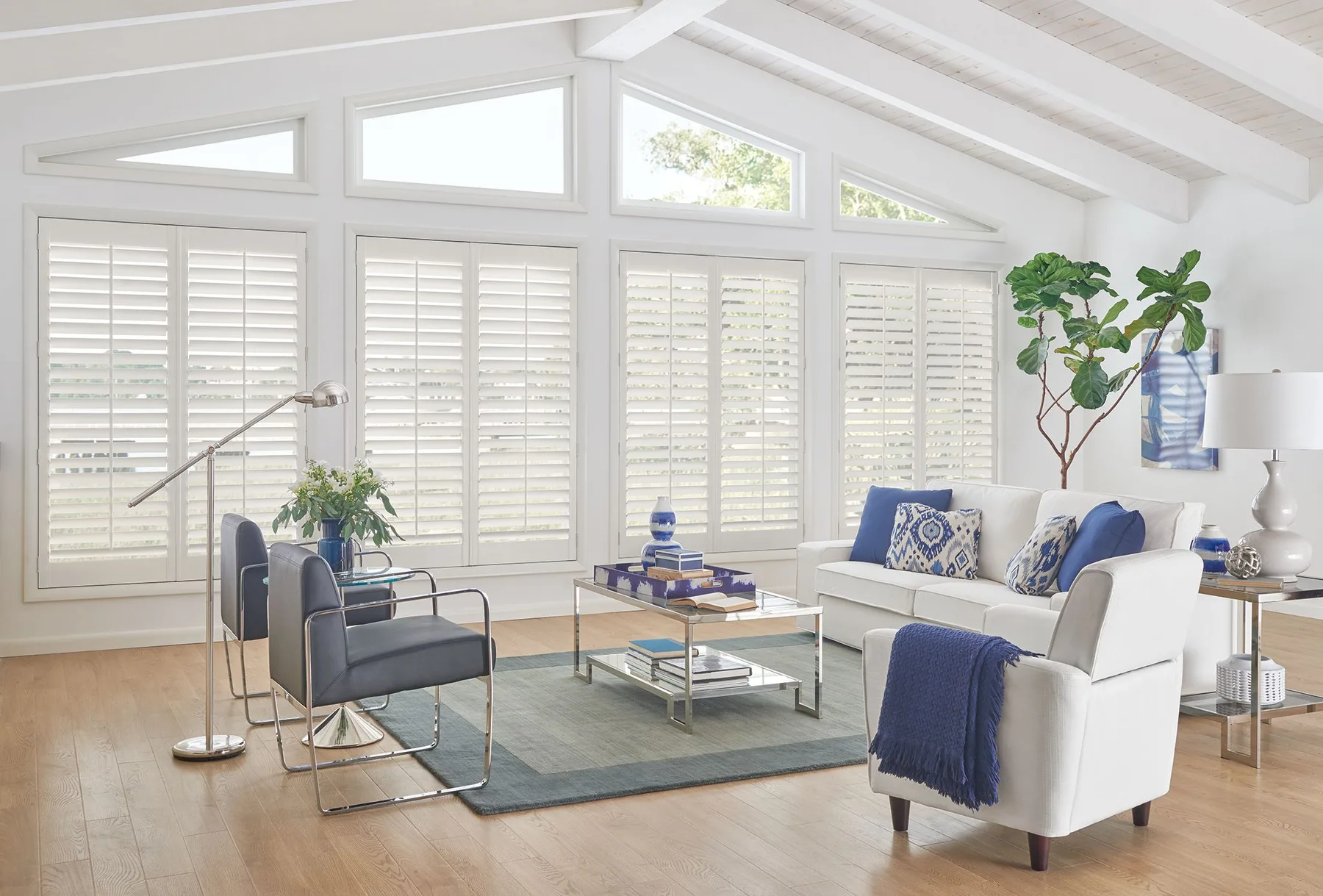
Most Philadelphia homeowners treat plantation shutters as a style decision when it’s really a climate decision. A freeze-thaw winter and a humid summer both put demands on your windows that fabric or vinyl window treatments handle differently than a custom-fit interior shutter does. This guide walks through the cost, the climate math, the material choice between wood and composite, and the honest cases where a cheaper window covering is the smarter call for your home.
Key Takeaways
- Climate data: January heating demand and June cooling demand
- Fit and lifespan: custom-measured interior shutters
- County housing values: suburban markets differ
- Material by room: composite in humid spaces, wood elsewhere
- Not worth it: short ownership horizon or tight budget
How Plantation Shutters Compare on Cost with Blinds and Curtains
The honest cost comparison isn’t the price tag you see on day one. It’s the plantation shutters cost divided by how many years the treatment actually lasts in your home. Pricing varies by material, window size, and whether you choose wood or composite construction.
| Treatment | Upfront Cost | Service Life | Cleanability | Built-In Look |
|---|---|---|---|---|
| Plantation shutters | Highest in the category | Typically decades when well made and precisely installed | Wipes clean | Custom-fit, permanent |
| Wood or faux-wood blinds | Mid-range | Several years to a decade, depending on material and use | Adequate, slats collect dust | Attached, not built-in |
| Curtains and drapery panels | Lowest in most cases | Shorter replacement or cleaning cycle | Fabric soils and fades | No built-in look |
For a Philadelphia home you plan to keep long term, the higher upfront investment of plantation shutters gets spread across a service life that usually outlasts blinds and curtains by years. That’s where the math shifts in their favor.
If you plan to move within a couple of years or rearrange rooms often, the equation runs the other way. The classic clean lines and timeless appeal match traditional Philadelphia architecture, but climate is the next variable that changes that math.
How Philadelphia’s Four-Season Climate Changes the Value Case
According to NOAA climate normals for the Philadelphia Franklin Institute station, January averages 939 heating degree days at base 65°F, and June averages 319 cooling degree days at the same base. Both seasons matter here.
Those figures come from NOAA climate normals for the Philadelphia Franklin Institute station. Closed shutter panels add an insulating layer against cold-side glass during those winter stretches, and tilted louvers block direct sun and heat gain on humid summer afternoons. Custom fit matters because gaps around a panel undo that insulation benefit, which is why our Philadelphia area team measures in 1/4-inch increments before any product is ordered.
The U.S. Department of Energy’s window-attachment research excluded louvered and roller shutters because reliable simulation models weren’t available. What DOE and comparable AERC data do show is that different window treatments perform very differently on the same windows.
AERC reports median annual household savings of 800 kWh for blinds on double-pane, non-low-e windows. Cellular shades delivered 1,210 kWh under the same conditions. Treat shutters as a comfort, light-control, and insulation upgrade, not a guaranteed utility-bill number.
Material choice is the next lever that decides whether shutters actually deliver on that comfort case.
Wood vs Composite Plantation Shutters: Which Fits Your Rooms
Material choice is where the Philadelphia area’s climate, a room’s use, and a home’s architecture converge. Older homes on the Main Line and in Chestnut Hill often want the visual character of real wood, but a rowhome bathroom or a Conshohocken kitchen has different moisture demands. Many homeowners mix materials across different rooms to balance style and durability for each space.
Wood plantation shutters
Wood carries a natural grain, takes stain or paint, and pairs well with historic architecture across Chester and Montgomery Counties. The weight and finish depth make wood shutters read as built-in millwork rather than a window covering. Well-made shutters in this material work best in controlled indoor environments.
- Living rooms and formal dining rooms
- Bedrooms and studies
- Historic homes where stained-wood millwork already sets the tone
- Rooms with stable, indoor-controlled humidity
Composite plantation shutters
Composite shutters use an engineered core with a painted finish that resists warping and swelling in humid conditions. You get the same custom-fit, built-in look at a different price and weight point, and they belong in our interior shutter options worth asking about during a consultation. If you love the shutter look but need moisture resistance, composite delivers.
- Bathrooms and laundry rooms
- Kitchens near cooking steam
- Sunrooms and screened porches transitioning to interior
- Homes where consistent paint color across every window matters more than natural grain
Materials matter most because they change how long the shutters last and how well they hold their appearance, which is where the resale conversation starts.
Lifespan, Durability, and What Shutters Do for Resale Appeal
Do plantation shutters raise appraisal value?
Appraisers work from comparable sales, not a line-item premium for window treatments. What shutters do change is buyer perception, and homes with custom, built-in window treatments tend to show better and move faster in listings.
In higher-value submarkets across Bucks, Chester, and Montgomery Counties, median owner-occupied home values sit above $436,000 per U.S. Census Bureau QuickFacts. Buyers in these markets expect a certain finish level, and shutters read as part of that.
Those county figures come from U.S. Census Bureau QuickFacts. The timeless appeal and privacy control they offer continue to attract buyers looking for move-in-ready homes.
Custom-fit, built-in shutters that are properly measured and installed typically outlast fabric drapery cycles and most vinyl treatments. The reasons are structural: solid or engineered panels, hinge hardware you can maintain, and a wipe-clean surface that doesn’t yellow or sag over time. That precision-fit standard is part of what The Shutter House of Philadelphia builds into every installation project.
Durability and buyer appeal are the strongest arguments for a homeowner who plans to stay, which is exactly why the “not worth it when” list below matters just as much.
When Plantation Shutters Are Worth It in Philadelphia, and When They Aren’t
| Worth it when | Not worth it when |
|---|---|
| You plan to stay in the home 5+ years | You’re likely to move within 1-2 years |
| Older Philadelphia area home where standard-size treatments never fit the window | Standard window sizes and short-term budget priority |
| You want a built-in look, not a fabric treatment | You rearrange room layouts frequently |
| Bucks, Chester, or Montgomery submarket where finish level shows on resale | Rental property or transitional space |
| Bathrooms, kitchens, or sunrooms where fabric and blinds struggle with moisture | Rooms where inward panel swing blocks furniture or window opening |
The honest answer for most Philadelphia area homeowners: shutters are worth it in the specific homes and rooms where all three conditions line up. You’re staying, the windows justify a custom-fit product, and you value the built-in look.
If you’re weighing shutters against interior shades or wood blinds, and the disqualifiers above describe your situation, the cheaper treatment is often the smarter call. Understanding your budget, timeline, and how you use each room clarifies whether the money makes sense for your project.
The clearest way to know is to walk your rooms with someone who measures both categories and can quote both. Our Philadelphia team schedules free in-home consultations across Chester, Montgomery, Bucks, and Philadelphia Counties.
Plantation Shutters in Philadelphia: Common Questions
Are plantation shutters worth it in Philadelphia?
Yes, in the specific homes and conditions this guide describes: a longer ownership horizon, windows that don’t fit standard-size treatments, and a submarket where finish level matters on resale. Philadelphia’s heating and cooling degree days mean insulation and light control carry real weight here, not just style. The Shutter House of Philadelphia measures each home individually to confirm the fit before you commit.
Are plantation shutters more energy efficient than blinds?
Window treatments do not all perform the same, and plantation shutters weren’t directly modeled in the DOE’s major window-attachment study. Different attachments vary widely by type. Treat shutters as an insulation and light-control upgrade rather than a guaranteed energy-savings figure. Open louvers let light in while maintaining privacy, and closed panels add an insulating layer during temperature extremes.
Do plantation shutters add value to my Philadelphia home?
Appraisers price homes from comparable sales, not a line-item credit for window treatments. Shutters influence buyer appeal instead. They read as a finished, built-in detail that helps a home show well, especially in higher-value submarkets. That’s a perception advantage, not a guaranteed dollar return. The future buyer sees a move-in-ready home with privacy control already in place.
What is the downside of plantation shutters?
The honest downsides are cost, swing, and cleaning. Plantation shutters carry the highest upfront cost in the window-treatment category. The inward panel swing can conflict with furniture placement near the window. Cleaning between louvers takes more attention than wiping down a roller shade. If those factors don’t fit your situation, we offer other window treatments that may work better.
Are faux wood plantation shutters better than real wood in humid rooms?
Composite generally wins in bathrooms, kitchens, and other moisture-prone rooms because the engineered core resists warping and swelling. Wood wins in living areas and historic homes where the grain and finish depth matter more than moisture resistance. Many Philadelphia area homes end up using both, split by room. Our interior shutter options cover either path.
How long do plantation shutters last in a Philadelphia home?
Well-made shutters, precisely installed, typically last far longer than fabric drapery cycles and most vinyl treatments. Solid or engineered panels, maintainable hinge hardware, and a wipe-clean surface let them hold their appearance for years without sagging or yellowing. The comparative advantage, not a specific year count, is what makes the upfront cost pay back over time.
Are plantation shutters worth it if I might move within a couple of years?
Probably not. The value case depends on spreading the cost across years of use, and shutters typically stay with the home rather than moving with you. A short ownership horizon rarely earns back the upfront investment. A lighter-touch treatment like wood blinds or shades usually makes more sense in that situation.
Are plantation shutters a good fit for older Philadelphia homes?
Yes, because older Philadelphia homes often have non-standard window sizes that retail-stock treatments can’t fit properly. Main Line estates and Chestnut Hill properties benefit from custom fabrication in 1/4-inch increments rather than a one-size approach. Schedule your free in-home consultation to see what fits your windows.
