
Last Updated: June 17, 2026
The west-facing living-room window that gets miserable from 3 to 7 p.m. in July is doing more than letting in light. This guide gives you a composite, fiberglass, and wood framework matched to room and exposure across East Alabama, so the shutter you pick actually earns its keep in August. Keith Davis leads our Auburn team and walks homeowners through the material trade-offs without a sales push.
- Standard double-pane windows allow most summer sunlight to enter as interior heat
- Composite resists Alabama humidity; real wood needs climate-controlled rooms to stay flat
- West-facing and lakefront windows often need interior shutters paired with exterior shading
- Material choice matters more than louver size in East Alabama
How Summer Heat Moves Through Your Auburn Windows
According to the U.S. Department of Energy, about 76% of the sunlight that hits standard double-pane windows in cooling season enters the home as heat.
That number changes how you should think about shutter material. In a cooler market the choice is mostly style; in Auburn, AL, where NOAA’s current 1991-2020 normals set the climate baseline for East Alabama, the louver in front of the glass is partly a heat-control decision.
The room that hurts in July is the one whose window faces the wrong direction. Four orientations carry most of the summer load on an Auburn home:
- West-facing windows that take the 3 to 7 p.m. sun on a living-room wall
- South-facing windows that hold a steady midday load through the longest hours of daylight
- Southwest corner rooms that combine both exposures and stay warm into the evening
- Lake-facing windows on Lake Martin properties that get direct sun plus reflected glare off the water
Those four windows drive most of the material conversation, and they are where interior shutters earn or lose their cost. The next question is which material belongs in front of them.
Composite vs Fiberglass vs Wood for East Alabama Humidity
The right material here depends on where the window lives, not just on how the room looks. Humidity, sun, and how often the louvers move all push different materials in different directions.
| Material | Humidity Resistance | Heat & Dimensional Stability | Best Rooms | Maintenance |
|---|---|---|---|---|
| Composite | High; resists swelling and warping | Stable through Alabama heat swings | Bathrooms, kitchens, Lake Martin homes, lakefront porches | Low; wipe clean |
| Fiberglass | Very high; engineered for moisture | Very stable under direct sun and heat | Harshest west-facing rooms, waterfront walls | Minimal; rarely needs touch-up |
| Wood | Low unless sealed; vulnerable to humidity | Can warp or cup when air carries moisture | Climate-controlled formal rooms, low-exposure bedrooms | Periodic refinishing |
Keith routes composite to high-moisture rooms, fiberglass to the harshest sun and waterfront exposures, and wood shutters only to climate-controlled rooms where the grain is the point. Composite reads as wood from across the room and holds its shape when the air carries the humidity Lake Martin delivers in August. Real wood asks for a drier room and an owner who is willing to refinish.
Across all three materials, you have custom fit, multiple louver sizes, and the option of custom plantation shutters sized to your exact openings, with operable shutter hardware that lets the louvers do their job. Material is the first decision. Whether interior alone is enough is the second.
When Interior Shutters Win, and When You Need Exterior Shading
According to the U.S. Department of Energy, window awnings reduce summer solar heat gain up to 65% on south-facing windows and up to 77% on west-facing windows.
Interior shutters do a lot, but they do not block the heat before it hits the glass. That distinction matters most on the windows that hurt the most, and those numbers shift the conversation from “interior alone” to “the right pairing for the room.” A simple exposure map covers most Auburn homes:
- East-facing bedroom: interior plantation shutters alone are usually enough
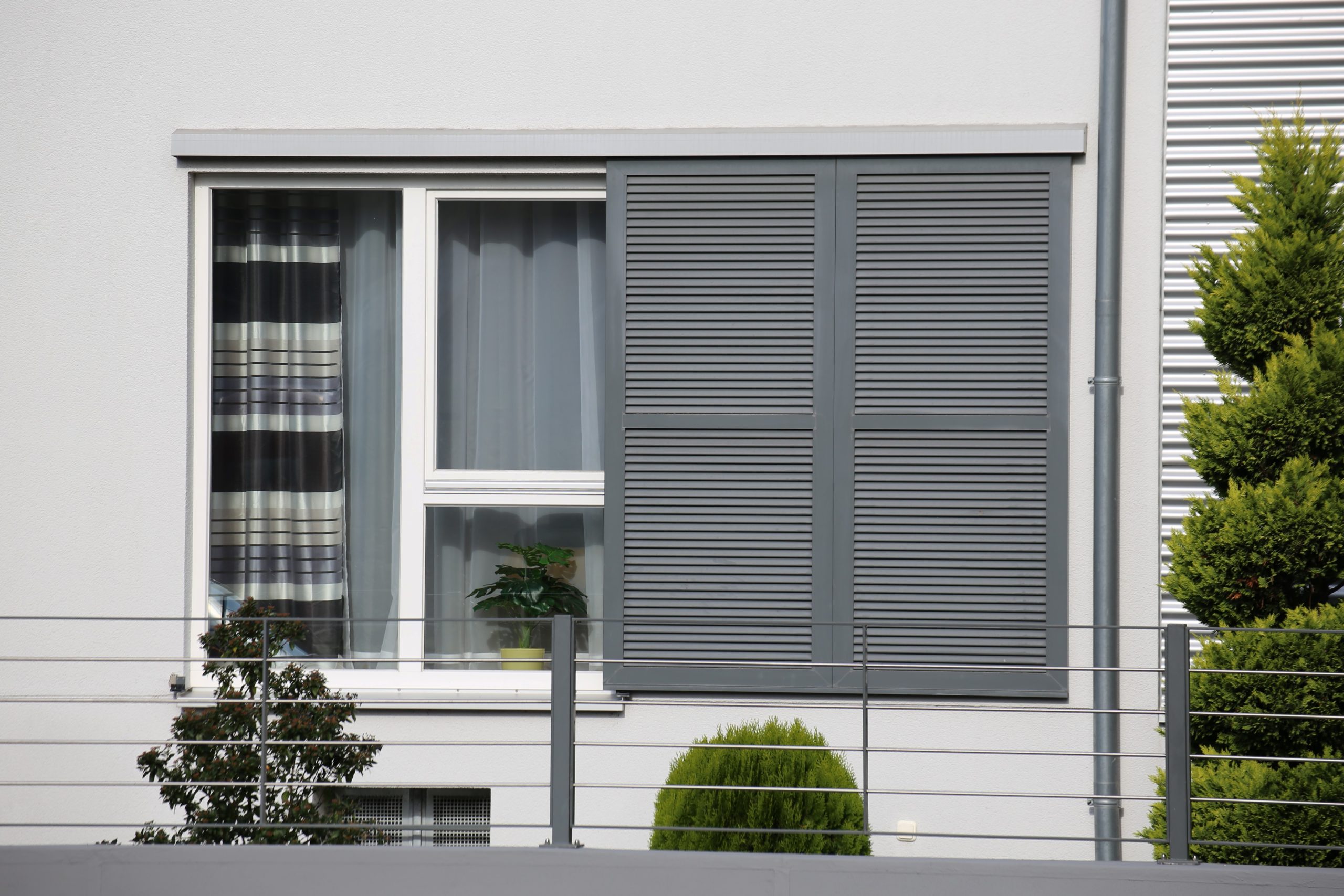
- West-facing living room: interior shutters paired with exterior shades or retractable patio awnings for the afternoon load
- Lakefront south wall: exterior shutters or patio screen systems to handle lakefront glare and reflected UV, with interior shutters for evening privacy
- Bathrooms and kitchens: composite interior shutters that shrug off the humidity
The same DOE guidance shows that a tightly installed cellular shade reduces unwanted solar heat through a window up to 60%. That is why the answer for a bad west room is sometimes “shutters plus a shade,” not “shutters alone.” The product you actually adjust is the one that pays off, which is why operability and a tight fit matter as much as material grade.
Choosing Shutters for Auburn, Opelika, and Lake Martin Homes
Auburn’s housing stock runs from 1893-vintage homes near campus to new builds in Pike Road, and the right shutter changes with the wall it sits on. The Census counts 36,889 housing units in the city, and the range across them is wide enough that no single material is the answer.
A few regional patterns shape the recommendation:
- Auburn and Opelika residential streets mix historic stock with new builds, so the same neighborhood asks for composite in one home and fiberglass in another across the full service area
- Phenix City and Valley properties along the Chattahoochee corridor face long sun exposure on west walls
- Pike Road, Eclectic, and Tuskegee properties skew toward larger residential lots with full afternoon exposure on at least one elevation
Keith Davis, who leads our Auburn team, reads the room before he reads the catalog, and the housing context shapes that read. Permits issued by the City of Auburn on or after January 1, 2022 fall under the City of Auburn’s 2021 code memo, which is the current-code signal worth knowing when you’re working on a recent build. The climate baseline is not a guess either: NOAA’s current climate normals pull from a station record reaching back to 1893.
Lake Martin shutters: glare, moisture, and west-facing afternoons
On a Lake Martin south wall in August, the glare off the water and the humidity inside the screened porch hit a real-wood louver in different ways than a composite or fiberglass one. Waterfront homes get direct sun, reflected UV off the lake, and a moisture load that persists through the night. Lakefront properties in the Lake Martin area face conditions that push composite and fiberglass ahead of traditional wood options.
The U.S. Department of Energy reports that 75% of residential window coverings stay in the same position every day, which means the shutter you actually adjust is the one that earns its place in July.
That stat changes the recommendation. A heavy wood panel that nobody opens does less for a lake house than an operable composite louver the family actually moves through the day. Composite or fiberglass first, with outdoor shutter installation where the wall needs extra protection from sun and storms. Browse the project gallery to see how those pairings look on real Lake Martin elevations.
Frequently Asked Questions
Do shutters keep heat out in summer?
Yes, but their impact depends on material, fit, and whether they are paired with exterior shading on the worst exposures.
Custom shutters add a layer between the room and the glass, and the right material in front of a properly measured window meaningfully cuts the summer load. The Shutter House in Auburn, AL sizes the recommendation to the room and delivers products crafted to your exact specifications. We come to your home for a complimentary consultation, take precise measurements, order your custom products, and handle professional installation from start to finish.
What type of shutters are best for hot climates?
Composite and fiberglass perform best across most rooms in hot, humid climates, with real wood reserved for climate-controlled spaces.
Composite handles bathrooms, kitchens, and high-humidity zones without warping. Fiberglass handles the harshest west-facing rooms and waterfront walls. West-facing rooms often want shutters plus exterior shading rather than shutters alone, because exterior shading stops the heat before it reaches the glass. Vinyl shutters offer another durable option for spaces where moisture resistance and lasting performance matter most. Our team provides custom solutions tailored to your home’s exposures.
Are plantation shutters good for insulation?
Yes, plantation shutters add a layer of dead air between the room and the glass that helps with both heat in summer and cold in winter.
The adjustable louvers also let you gate the sun angle through the day, which a fixed window covering cannot do. Closed louvers on a west-facing window in late afternoon block the direct beam, and tilted louvers earlier in the day let in light without the heat. Precise measurements during the consultation ensure a gap-free fit that maximizes thermal performance.
Do shutters help with humidity?
Shutters do not lower the humidity in the room, but the right material won’t warp, swell, or peel in it.
That distinction matters in Auburn bathrooms and on Lake Martin porches where the air carries moisture year-round. Composite and fiberglass louvers stay flat through Alabama humidity. Untreated or lightly sealed wood, in the same room, cups, swells at the joints, and loses the clean louver line that makes the product look right.
Which is better, wood or composite shutters?
Different rooms, different winners; composite wins for humid spaces and lake-area exposure, wood wins for climate-controlled formal rooms.
The decision is room-by-room, not house-by-house. A formal dining room with steady air conditioning and a north-facing window takes real wood and rewards the grain with natural warmth and traditional elegance. A kitchen with morning sun and steam, or a Lake Martin bedroom with afternoon glare, asks for composite. Custom shutters complement each property’s architectural detail and maintenance preferences.
Are exterior shutters worth it in hot weather?
Yes, especially on west-facing walls and homes with no porch overhang, because they block sun before it reaches the glass.
Exterior shading is the strongest summer-heat tool you have, and that is why the awnings and exterior-shutter data is so much stronger than interior-only numbers. On a west elevation with afternoon sun beating against bare glass, custom outdoor awnings or an operable exterior shutter pull the heat load down before it ever becomes a room temperature problem. Exterior solutions also add privacy and storm protection while improving curb appeal.
What holds up better near a lake, wood or composite?
Composite, by a wide margin, because waterfront humidity and reflected glare punish untreated wood.
Keith and our Auburn team route Lake Martin homes toward composite or fiberglass first, especially on rooms that face the water. The combination of direct sun, UV reflected off the surface, and persistent humidity is harder on a wood louver than the same conditions on a non-waterfront home a few miles inland. Composite holds its line through all of it and delivers lasting performance.
Are shutters enough to cool a west-facing room, or do I still need shades or film?
For a hard west exposure, shutters often need a partner; pairing interior shutters with exterior shades, awnings, or solar film usually outperforms shutters alone.
Interior products block heat after it has crossed the glass. Exterior products block it before. On a west-facing living room that gets the worst of an Auburn July, the answer is usually a layered approach: an operable interior shutter for privacy and light control, plus an exterior shade or awning that handles the afternoon load on the outside of the window.
Are shutters worth the money if my main problem is afternoon sun?
Yes, when the material and exposure are matched correctly, because the wrong material in the wrong room wastes the spend.
The cost question and the comfort question are the same question. A wood louver on a humid west wall fails in a way that has nothing to do with how much you paid for it. A composite or fiberglass louver matched to the same wall, with exterior shading where the exposure demands it, holds up and earns its keep. Request a Quote and we will measure the rooms that hurt.
How do I choose the right interior shutters?
Walk a four-factor framework: room moisture, sun exposure, maintenance tolerance, and style preference, in that order.
Start with the room. A bathroom and a formal dining room are not the same problem. Then read the exposure: west, south, east, or shaded. Then decide how much maintenance you are willing to do, which usually rules wood in or out. Style comes last because materials all carry similar louver options. The Shutter House in Auburn handles measuring and installation and the material match during the in-home consultation; see reviews from homeowners who walked the same decision. Our team brings deep expertise and precision to every project, from classic designs to specialty shapes that match your home’s timeless style and beauty.
